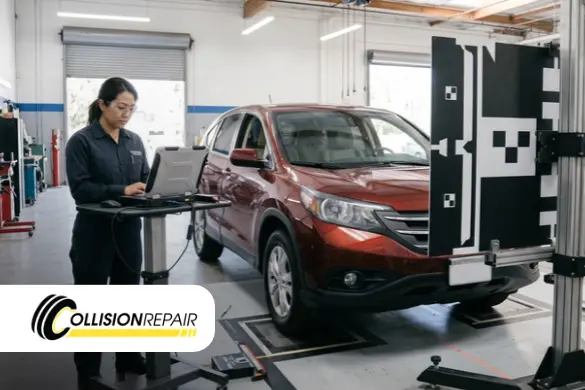
Picking up your car after collision repairs should feel reassuring. The dents are gone, the paint looks fresh, and the repair shop says your vehicle is ready. But how can you tell whether the work was completed correctly?
Understanding how to check collision repairs after a crash can help you spot problems that might otherwise go unnoticed until you’re back on the road.
Whether your vehicle was damaged in a rear-end collision on Interstate 5 or a parking lot accident in Sacramento, a proper repair involves more than making the exterior look presentable.
Paint quality, panel alignment, steering performance, and safety-related components all deserve attention.
Professional auto body repair may involve several stages, from damage assessment and structural correction to auto painting, component replacement, and final quality checks. Understanding the repair process can help vehicle owners recognize whether the completed work meets reasonable expectations.
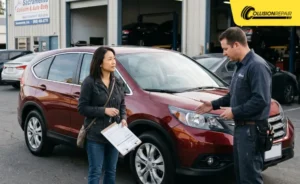
Before signing the final paperwork and driving away, take time to inspect your vehicle and ask questions about the completed work.
Why You Should Inspect Your Car Before Accepting Collision Repairs
Even when a repair shop has completed the work listed on an estimate, a final inspection gives you an opportunity to identify visible problems or request clarification.
Some issues are cosmetic, while others may affect how your vehicle handles or how its safety systems function.
Cosmetic Repairs Are Not the Same as Structural Repairs
A bumper may look new while mounting components behind it remain damaged. Similarly, a vehicle’s exterior panels may appear straight even though an underlying alignment problem needs further evaluation.
Modern collision repairs can involve structural measurements, replacement parts, electrical components, and electronic safety systems.
Not every repair requires all these procedures. The work required depends on the extent of the collision damage and the vehicle manufacturer’s repair instructions.
For example, minor dents may qualify for paintless dent repair, a technique that reshapes certain damaged panels without traditional repainting. Other damage may require conventional dent removal, body filler, panel replacement, or structural repairs.
More serious collisions may require Frame Straightening or structural alignment procedures using specialized measuring and repair equipment. These procedures must follow applicable manufacturer specifications, and some structural components may require replacement rather than straightening.
Why Inspecting Before Pickup Matters
Inspecting the vehicle at the shop allows you to discuss concerns while the repair team and paperwork are available.
You can ask the technician to explain unfamiliar repairs, demonstrate completed work, or clarify whether additional inspections were performed.
If you notice a problem, document it before leaving and request a written explanation of the next steps.
A professional repair facility should have a quality-control process intended to identify unfinished work before delivery. However, even quality repairs deserve a final customer inspection to confirm that the vehicle’s appearance and operation meet expectations.
Visual Signs of Poor Repairs: Paint, Panel Gaps, and Overspray
Start with a walk-around inspection in good lighting. Compare the repaired areas with nearby panels that were not damaged.
Here is a simple checklist to use before accepting your vehicle.
Post-Repair Visual Inspection Checklist
- Paint color matches. Check the repaired panels from several angles and under natural light. A noticeable color difference may indicate a paint-matching issue.
- Paint texture looks consistent. Watch for excessive orange-peel texture, rough patches, runs, bubbles, or uneven gloss.
- Panel gaps are reasonably even. Compare spacing around the hood, doors, trunk, and fenders. Large differences may suggest improper alignment.
- No overspray is visible. Look for paint residue on windows, rubber seals, headlights, trim, and wheels.
- Doors and panels open smoothly. Doors, the hood, and the trunk should latch securely without unusual force.
- Lights and trim are secure. Check headlights, taillights, mirrors, moldings, and bumper attachments.
- Weather seals are properly fitted. Inspect rubber seals around repaired doors, windows, and trunk openings.
- The interior is clean and complete. Look for loose trim, missing clips, or damage that was not present before the repair.
What Do Uneven Panel Gaps Mean?
Uneven gaps do not always prove poor workmanship. Vehicle designs and manufacturing tolerances vary.
However, a gap that differs significantly from the opposite side of the vehicle may warrant closer inspection.
For example, if the repaired hood sits noticeably higher than the adjacent fender, ask the technician to explain the difference.
Should You Be Concerned About Paint Overspray?
Yes, particularly when paint appears on surfaces that were not supposed to be refinished.
Overspray may suggest that surrounding components were not adequately protected during painting.
A reputable repair shop should be willing to examine and address concerns about the finish.
How Can You Check Paint Color Matching and Refinishing Quality?
Proper color matching is an important part of restoring a vehicle’s appearance after a collision.
During paint refinishing, technicians may use manufacturer paint codes, color formulas, spray-out samples, and blending techniques to help match the repaired panel with surrounding surfaces.
However, differences in lighting, paint age, metallic finishes, and application techniques can affect the final appearance.
When inspecting your vehicle:
- Compare repaired panels under natural daylight.
- Look at the paint from different viewing angles.
- Check whether the gloss and texture match adjacent panels.
- Look for visible sanding marks or uneven clear coat.
- Ask whether blending was necessary to achieve a consistent finish.
Small paint touch-ups may be appropriate for certain minor surface defects, while more extensive damage may require refinishing an entire panel.
A noticeable mismatch does not always mean the repair is defective, but it is reasonable to ask the shop to evaluate the result.
Check Replaced Windows and Windshields
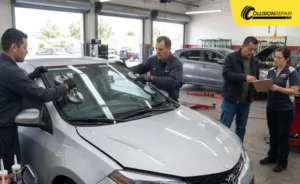
If the collision required auto glass replacement, inspect the new glass for scratches, chips, improper fitment, or visible sealing problems.
Check whether surrounding trim is secure and whether the glass appears properly positioned.
For vehicles equipped with windshield-mounted cameras or sensors, ask whether applicable calibration procedures were completed after replacement.
How to Test-Drive Your Car After Repairs
A vehicle may look properly repaired while still having problems that become noticeable during normal driving.
If the repair shop confirms the vehicle is safe to operate, arrange a short test drive on a familiar, low-traffic route.
Do not test-drive a vehicle if there are obvious safety concerns, fluid leaks, damaged tires, or serious warning lights.
Check Steering and Vehicle Alignment
On a level, safe roadway, pay attention to how the vehicle responds under normal steering conditions.
Potential warning signs include:
- Pulling noticeably to one side
- A steering wheel that is off-center when driving straight
- Unusual vibration
- Difficulty maintaining a straight path
- New steering noises
Road slope, tire pressure, and tire condition can also affect handling, so these symptoms do not automatically establish faulty collision repairs.
However, they should be evaluated before you resume regular driving.
Listen for Unusual Noises
Pay attention to rattling, grinding, clicking, or wind noise that was not present before the collision.
These sounds may indicate loose components, improperly fitted panels, or other issues requiring inspection.
Test Braking and Suspension
During ordinary, low-speed driving, observe whether braking feels consistent and the vehicle responds normally.
Avoid aggressive braking or hazardous driving maneuvers to test repairs.
If you notice significant vibration, unusual pulling, or changes in braking performance, stop driving when safe and arrange an inspection.
Verify Electronic Safety Features
Modern vehicles may have advanced driver assistance systems (ADAS), including:
- Automatic emergency braking
- Lane departure warnings
- Blind-spot monitoring
- Adaptive cruise control
- Parking sensors and cameras
Depending on the extent of the damage and the repair procedures, certain sensors or cameras may require inspection or calibration.
Ask whether the manufacturer-required scans and calibrations were completed, and request supporting documentation when applicable.
A dashboard without warning lights does not necessarily confirm that every safety system has been properly calibrated.
Documents to Request: Final Invoice, Parts List, and Warranty
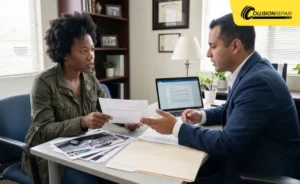
Before accepting your vehicle, review the paperwork provided by the repair shop.
California’s Bureau of Automotive Repair (BAR) establishes documentation and authorization requirements for registered automotive repair dealers.
According to the California Bureau of Automotive Repair, repair businesses must document authorized work and provide customers with an itemized final invoice.
1. Final Repair Invoice
The final invoice should identify the repairs performed, parts supplied, and associated charges.
Compare it with the original estimate and any authorized supplements.
If you notice work that was not discussed, ask the shop to explain when and how it was authorized.
2. Replacement Parts Information
Review the parts used in the repair.
Depending on the repair, parts may include original equipment manufacturer (OEM) components, aftermarket parts, or qualifying recycled or reconditioned parts.
Ask which parts were installed and whether they meet the applicable repair requirements.
3. Repair Warranty
Request the shop’s written warranty, if one is offered.
Review:
- Which repairs or components are covered
- How long coverage lasts
- What conditions or exclusions apply
- How to request warranty service
- Whether coverage transfers to another owner
Do not assume every shop provides the same warranty or that all repair-related problems are covered.
4. Additional Repair Documentation
For more extensive collision repairs, ask whether the shop can provide relevant documents such as:
- Wheel alignment results
- Structural measurement reports
- Diagnostic scan results
- ADAS calibration documentation
- Photographs taken during disassembly or repairs
Not every document applies to every repair.
However, these records can help clarify whether necessary procedures were completed.
5. Technician Training and Repair Qualifications
Vehicle owners may also ask about the training and qualifications of the technicians who performed the work.
For example, I-CAR certified is a phrase sometimes used when discussing collision repair training, although I-CAR offers specific individual credentials and facility recognition programs with different requirements.
Rather than relying on a general certification claim, ask which technicians hold relevant credentials and whether the facility follows the vehicle manufacturer’s repair procedures.
Training and certification can support professional repair practices, but they do not replace a thorough inspection of the completed work.
Getting a Second-Shop Post-Repair Inspection
If you remain concerned about the repair quality, an independent inspection may help identify issues that are difficult to evaluate visually.
For example, a second auto body shop in Sacramento may be able to examine panel alignment, paintwork, replacement parts, and evidence of incomplete repairs.
When Should You Get a Second Opinion?
Consider an independent inspection if:
- The vehicle pulls or vibrates after repairs
- Panel gaps remain noticeably uneven
- Paint defects are visible
- Safety-related warning lights appear
- You suspect structural damage was overlooked
- The original shop cannot explain the work performed
- Your insurer disputes the need for additional repairs
What Happens During a Post-Repair Inspection?
A qualified technician may compare the completed repairs with the original damage, repair estimate, and manufacturer procedures.
Depending on the concerns, the inspection may involve visual examination, diagnostic scans, measurements, or additional testing.
A more detailed inspection may require disassembly and could involve additional charges.
Ask for a written explanation of the inspection scope and cost before authorizing the work.
Why an Independent Report Can Help
An inspection report can provide specific findings rather than relying solely on a general statement that the repair looks wrong.
If further work is needed, the report may help you discuss the issue with the original repair shop or insurance company.
What Should You Ask Before Scheduling an Inspection?
When comparing repair facilities in Sacramento or West Sacramento, ask about the types of inspections offered and whether the shop has experience with your vehicle’s make and model.
Useful questions include:
- Does the shop provide written post-repair inspection findings?
- Can technicians evaluate structural alignment and electronic systems?
- Are diagnostic scans or measurements included?
- Does the shop offer Free estimates for corrective work?
- Will additional inspection or disassembly fees apply?
- How soon can the vehicle be evaluated?
Some facilities provide complimentary initial estimates, while others charge for detailed inspections. Confirm pricing and services before scheduling.
If you need to wait during an initial assessment, you can also ask whether the facility provides customer waiting areas, appointment scheduling, or transportation assistance.
These amenities may make the process more convenient, but technical qualifications and inspection quality should remain the primary considerations.
What to Do If Collision Repairs Were Done Wrong
Discovering incomplete or unsatisfactory repairs can be frustrating, especially when you have already spent time waiting for your vehicle.
The best approach is to document the concern and give the responsible parties an opportunity to review it.
Step 1: Document the Problems
Take clear photographs and videos of visible defects.
Record any unusual handling, noises, or warning messages.
Keep copies of the repair estimate, final invoice, warranty, and communications with the shop.
Step 2: Contact the Original Repair Shop
Explain the specific issues and request a follow-up inspection.
Ask whether the concerns are covered by the shop’s workmanship warranty or require additional diagnosis.
Keep the discussion factual and request written confirmation of any proposed corrective work.
Step 3: Notify Your Insurance Company if Applicable
If insurance paid for the repairs, notify the adjuster about unresolved issues.
A California car accident claim may involve supplemental repair estimates when additional accident-related damage is identified.
However, approval depends on the policy, supporting evidence, and circumstances.
Step 4: Request an Independent Inspection
If the original shop cannot resolve your concerns, consider obtaining a written assessment from another qualified repair facility.
This may help determine whether the issue involves incomplete work, an unrelated mechanical problem, or a disputed repair procedure.
Step 5: Consider Filing a Consumer Complaint
If a repair dispute remains unresolved, California consumers can contact the Bureau of Automotive Repair for information about their rights and complaint procedures.
The BAR’s consumer auto repair resources explain estimates, repair authorization, invoices, and available consumer protections.
Step 6: Seek Legal Advice When Necessary
Some repair disputes involve insurance coverage, significant property damage, or disagreements over responsibility for additional costs.
Legal advice may be appropriate when the dispute cannot be resolved through the repair shop, insurer, or consumer complaint process.
How Do Insurance Claims Affect Corrective Repairs?
When a collision repair is covered by insurance, the initial estimate may not include every issue discovered during disassembly.
The repair shop may submit supplemental documentation explaining why additional work is necessary.
For unresolved insurance claims, keep copies of the insurer’s estimates, repair supplements, claim correspondence, and any written explanations for denied repairs.
If an insurer disputes the need for corrective work, an independent inspection may help establish whether the concern is related to the original accident.
However, insurance coverage and payment decisions depend on the policy terms and applicable law.