SUMMARY
A total car loss can impact your finances, insurance payout, and next steps after an accident. This guide explains how insurers evaluate damage, compare repair costs to value, and apply California’s total loss formula. Learn when to repair, when to replace, and how to make the right decision for your safety and budget.
Table of Contents
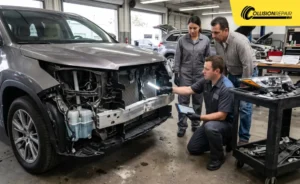
A serious crash can leave you asking one frustrating question: Is your vehicle worth repairing, or is it a total car loss? For many drivers in California, this decision isn’t just about damage—it directly affects your finances, insurance payout, and next steps.
What may look fixable on the surface could cost more than the car is worth, while some heavily damaged vehicles may still be repairable. The challenge is separating perception from reality and making a decision that protects both your safety and your wallet.
Here’s how to assess your situation clearly and move forward confidently.
What Does “Total Car Loss” Mean After an Accident?
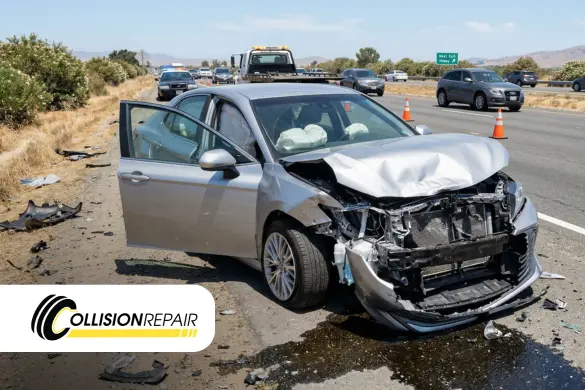
A total car loss occurs when repairing a vehicle costs more than its value, or close enough that insurers deem repairs impractical.
In simple terms:
- The car is not worth fixing financially
- The insurer opts to pay you instead of repairing it
This doesn’t always mean the vehicle is completely destroyed. Even moderate damage can result in a total loss designation depending on repair costs and vehicle value.
How Insurance Companies Determine Whether a Car Is a Total Loss in California
Insurance companies follow a structured evaluation process. They don’t rely on visual damage alone—they rely on numbers.
Key factors include:
- Estimated cost of collision repair
- Vehicle’s pre-accident market value
- Salvage value (what remains after damage)
In California, insurers compare repair costs against the car’s actual cash value (ACV).
According to the California Department of Insurance, Actual Cash Value (ACV) represents the fair market value of your vehicle before the accident. It reflects the price a knowledgeable buyer would reasonably pay and a seller would accept, with both parties acting voluntarily and without pressure.
If repair costs approach or exceed that value, the insurer may declare the car a total loss.
Understanding the Total Loss Threshold in California
California uses a Total Loss Formula (TLF) rather than a strict percentage threshold.
Formula:
- Cost of repairs + salvage value ≥ actual cash value
If this equation is met, the vehicle is considered a total loss.
Example:
- Repair cost: $9,000
- Salvage value: $2,000
- ACV: $10,000
Since $9,000 + $2,000 = $11,000 (which is greater than the ACV), the car qualifies as a total loss.
This approach allows flexibility but also means outcomes can vary depending on the insurer’s calculations.
Repairable vs. Totaled Vehicles: Key Factors to Consider
Not every damaged vehicle should be written off immediately. Some cases fall into a gray area.
Consider repairing if:
- Damage is mostly cosmetic
- Repair costs are significantly lower than ACV
- The car has strong resale or personal value
- No structural or safety components are compromised
Consider accepting a total loss if:
- Frame or structural damage is present
- Airbags deployed (expensive to replace)
- Electrical systems are affected
- Repair costs are close to or exceed the vehicle value
Safety should always outweigh sentiment. A repaired car must still meet road safety standards.
Cost of Repairs vs. Actual Cash Value (ACV): What Matters Most
This is the core financial comparison.
Factor | What It Means | Why It Matters |
Repair Cost | Estimate from the body shop | Determines feasibility |
ACV | Pre-accident market value | Sets payout ceiling |
Salvage Value | The remaining worth of the damaged car | Impacts total loss calculation |
Practical insight:
- A high repair estimate doesn’t automatically mean a total loss
- A low ACV (older car) increases the likelihood of being totaled
In many California car accident claims, disputes arise when drivers believe their vehicles are undervalued. Always review the valuation carefully.
Common Types of Damage That Lead to a Total Loss Declaration
Certain types of damage significantly increase the likelihood of a total loss:
- Frame damage – compromises structural integrity
- Engine damage – costly and complex repairs
- Flood damage – affects electronics and long-term reliability
- Airbag deployment – expensive safety system replacement
- Multiple system failures – electrical + mechanical issues combined
Even if the car appears repairable, these issues can quickly push costs beyond what is viable.
When to Seek Professional Guidance After a Total Loss Determination
You don’t have to accept an insurance decision at face value.
Seek professional input if:
- The payout seems too low
- The repair estimate seems inflated or inconsistent
- You want a second opinion on collision repair feasibility
Professionals who can help:
- Independent appraisers
- Auto body specialists
- Legal advisors handling California insurance claims
Getting a second evaluation can reveal overlooked repair options or valuation errors.
How Collision Repair Helps You Decide Whether to Repair or Replace Your Vehicle
Making the right decision requires more than a single estimate. Collision Repair (CORE) connects you with vetted auto body shops to provide accurate repair assessments and real cost insights.
What you can expect:
- Access to certified repair shops
- Reliable, real-world repair estimates
- Help coordinate with insurance
- Options to reduce out-of-pocket costs
Instead of relying only on your insurer, you get clear, data-backed guidance to decide whether repair or replacement makes more sense.
Practical Steps After an Accident
If you’re unsure whether your car is a total loss, take these steps:
- Get a detailed repair estimate
- Request your vehicle’s ACV breakdown
- Compare multiple repair quotes
- Review insurer calculations carefully
- Seek independent advice if needed
These steps help you avoid rushed decisions and protect your financial outcome.
FAQs
Can I keep my car if it’s declared a total loss?
Yes. You can usually retain the vehicle as “salvage,” but your payout will be reduced. You’ll also need to handle repairs and meet California requirements to make it roadworthy again.
What if I disagree with the insurance company’s valuation?
You can challenge it. Provide comparable vehicle listings, maintenance records, or request an independent appraisal. Disputes over value are common in California car accident claims.
Is it ever worth repairing a totaled car?
Sometimes. If repair costs are manageable and you understand the risks (lower resale value, salvage title), it may be viable—especially for newer vehicles.
Make the Right Financial and Safety Decision
A total car loss decision can feel overwhelming, but it ultimately comes down to safety, cost, and long-term value. Whether your vehicle is repairable or not, the goal is to make a decision that protects your finances and ensures reliability on the road.
If you’re unsure about your options, seeking advice from qualified repair professionals can help clarify your next step. Collision Repair connects you with trusted shops for accurate assessments and transparent repair cost insights, so you can make your decision confidently.
Avoid unnecessary costs—request a free quote today and make a well-informed next move.