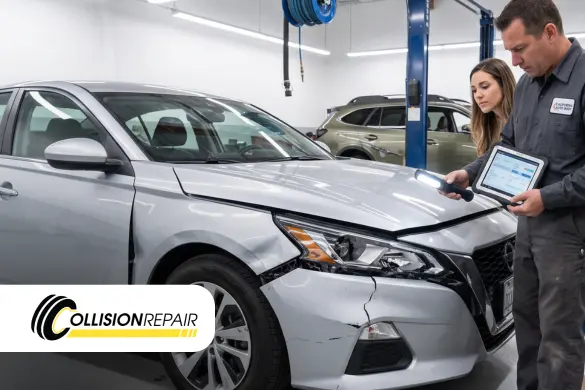
A collision repair bill can become confusing fast, especially when hidden damage appears after work begins. A clear collision repair estimate California vehicle owners can review before authorizing repairs helps set expectations for parts, labor, materials, and possible changes.
California repair rules require shops to provide an estimate before performing repair work. Shops must also obtain customer authorization, and collision estimates must identify the specific job and estimated parts and labor costs.
Knowing what should appear in the document can help you compare options, question unclear charges, and avoid surprises. Below, we explain the key elements of an estimate and how they affect the repair process.
What Information Should a California Collision Repair Estimate Include?
California’s Bureau of Automotive Repair (BAR) says an estimate must describe the job and state the estimated price for parts and labor. Collision estimates must be itemized.
Look for:
- The repairs the shop expects to perform
- Replacement parts required
- Estimated parts and labor charges
- Paint and material charges, when applicable
- Separately itemized hazardous-waste disposal charges, if any
- Whether crash parts are OEM, non-OEM aftermarket, used, rebuilt, or reconditioned
- The estimated repair total
The document should explain what you are approving. Ask about vague items before work begins.
How Are Labor, Parts, and Materials Listed on the Estimate?
An estimate should separate cost categories so you can see where the price comes from.
Estimate item | What to review |
Labor | Body, refinishing, structural, mechanical, or related operations |
Parts | The replacement part and its classification |
Paint/materials | Refinishing materials and job-specific supplies |
Other charges | Permitted charges tied directly to the repair |
Total | Estimated price for the authorized work |
BAR requires estimated prices for parts and labor, but the hourly labor rate itself need not appear. Sales tax is generally listed on the final invoice rather than the estimate.
OEM vs. Aftermarket Parts: What Should the Estimate Identify?
Part descriptions matter. BAR states that each new replacement crash part on a collision estimate is considered a new OEM crash part unless specifically identified as non-OEM aftermarket or used. Certain alternative labels do not satisfy this disclosure requirement.
The California Department of Insurance says aftermarket parts used in insured repairs must be comparable to OEM parts in kind, quality, safety, fit, and performance.
Before approval, ask:
- Which parts are OEM?
- Which are aftermarket or used?
- Does the insurer’s estimate differ from the shop’s?
- Could a parts change affect the price?
For a collision repair estimate California drivers receive during an insurance claim, clear part classifications make invoice review easier.
What Happens If Additional Damage Is Found During Repairs?
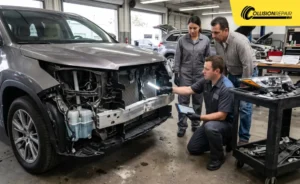
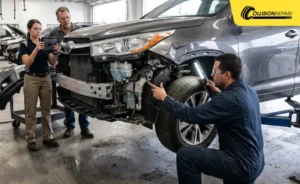
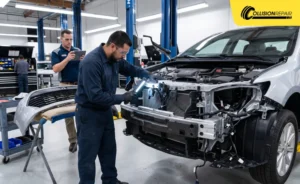
Some collision damage is hidden behind bumpers, panels, or trim. A shop may not know the full scope of the repair until disassembly.
If additional work is needed, California rules generally require a revised work order before extra repairs begin or additional charges accrue. It must describe the new parts and labor, state their cost, and provide the revised total. The shop must then obtain your authorization.
Authorization may be written, oral, or electronic. This lets you ask why the work is necessary and whether an insurer reviewed it.
Can Repair Costs Change After You Approve the Original Estimate?
Yes, but the shop generally cannot raise the bill and continue without approval. BAR states that additional repairs or charges require additional authorization before work proceeds.
Common reasons include:
- Hidden collision damage
- Additional calibration or diagnostic work
- Repair needs discovered after disassembly
- Differences between the insurer’s appraisal and the shop’s repair plan
When insurance is involved, the shop may request approval for supplemental costs. An insurer may reinspect newly discovered damage before agreeing to additional payment. This can also affect the scope and pricing of the collision repair services needed to complete the job.
What Should You Review Before Authorizing Collision Repairs?
Before approving a collision repair estimate California vehicle owners should review it line by line.
Check the following:
- Confirm the shop is registered with BAR.
- Verify the damaged areas and planned repairs.
- Review each replacement part classification.
- Ask how paint and materials are priced.
- Clarify whether teardown charges may apply.
- Confirm how supplemental repairs will be authorized.
- Keep the estimate, the insurer appraisal, the authorizations, and the final invoice.
BAR notes that teardown may carry a charge even if you later decide not to proceed.
If the crash involves injuries, liability, or a disputed insurance claim, an auto accident lawyer near you may explain issues outside the shop’s role.