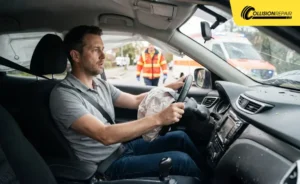
A low-speed crash can leave little more than a scratched bumper, yet the vehicle may have damage that is not visible from the curb. So, can you drive a car after a minor collision without creating another safety risk?
The answer depends on the condition of the brakes, steering, tires, lights, cooling system, body panels, and safety sensors—not simply how small the impact appeared. A car that starts and moves may still be unsafe or may suffer greater damage on the road.
Before leaving the scene, use a careful inspection to decide whether to drive, seek repairs, or arrange a tow.
When a Damaged Vehicle May Be Unsafe to Drive
California Vehicle Code section 24002 prohibits operating a vehicle that is unsafe or lacks required equipment. That rule applies even when a collision caused limited visible damage. A loose panel, leaking fluid, damaged tire, or impaired light can make a short trip hazardous.
A vehicle may be movable but not roadworthy. Driving it can worsen damage, create a traffic hazard, or complicate an insurance claim if its condition changes.
Warning Signs That Mean You Should Stop Driving
Do not continue driving when damage affects control, visibility, or essential systems. Arrange towing if you notice:
- Fluid leaking beneath the engine, radiator, transmission, or fuel system
- A flat, cut, bulging, rubbing, or misaligned tire
- Steering that feels stiff, loose, off-center, or heavy
- Brakes that feel soft, pull, grind, or respond slowly
- Smoke, steam, a burning smell, or rising engine temperature
- A hood, bumper, fender, or underbody panel hanging near a tire
- Broken headlights, brake lights, or turn signals
- Deployed airbags or seat belts that no longer work
- Red warnings for oil pressure, brakes, temperature, or charging
If traffic is dangerous, move to a safer spot where the vehicle can be operated safely. In Torrance, California, this might mean pulling into a nearby parking lot along Hawthorne Boulevard, Pacific Coast Highway, or near Del Amo Fashion Center instead of stopping in an active traffic lane.
How Bumper Damage Can Affect Hidden Components
Modern bumpers are more than painted covers. Behind the surface may be an energy absorber, reinforcement bar, brackets, wiring, parking sensors, radar units, cameras, and other crash-related components.
A bumper can return to its original shape even when the parts behind it remain bent, cracked, or compressed. Safety sensors may also shift out of position after an impact, affecting parking assistance, collision warnings, and other driver-assistance features.
False parking alerts, disabled safety systems, uneven panel gaps, unusual warning messages, or a loose bumper may indicate concealed damage that requires a professional inspection and possible recalibration.
What to Check Before Leaving the Accident Scene
Use this review only when it is safe to walk around the vehicle.
Area | What to inspect | Safer response |
Tires and wheels | Cuts, leaning wheels, rubbing, low pressure | Tow if damaged |
Fluids | Puddles, fuel odor, coolant, or oil | Shut off and tow |
Steering and brakes | Resistance, pulling, warning lights | Do not enter traffic |
Lights and mirrors | Broken lamps, loose mirrors, exposed wiring | Repair or tow |
Body panels | Loose hood, bumper, fender, or undertray | Tow if parts may detach |
Dashboard | Brake, oil, temperature, battery, and airbag warnings | Avoid driving |
Photograph the vehicle, road, debris, license plates, and visible fluid. Exchange license, registration, insurance, and contact information. California DMV guidance requires drivers involved in a collision to provide identifying and insurance information.
California requires an SR-1 report within 10 days if anyone is injured or killed, or if property damage exceeds $1,000. It is separate from a police or insurance report.
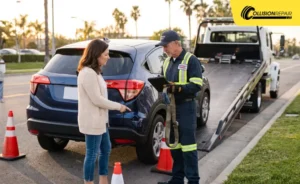
When to Call a Tow Truck
Call a tow truck whenever the car cannot be operated safely, predictably, or legally. Towing and roadside assistance may be necessary when airbags have deployed, fluids are leaking, a wheel is damaged, the vehicle is overheating, body panels may detach, or the steering and brakes feel abnormal.
A tow is also a safer choice when darkness, freeway traffic, rain, or poor visibility make damaged lighting hazardous. Tell the operator whether the vehicle is electric, all-wheel drive, lowered, or unable to shift into neutral.
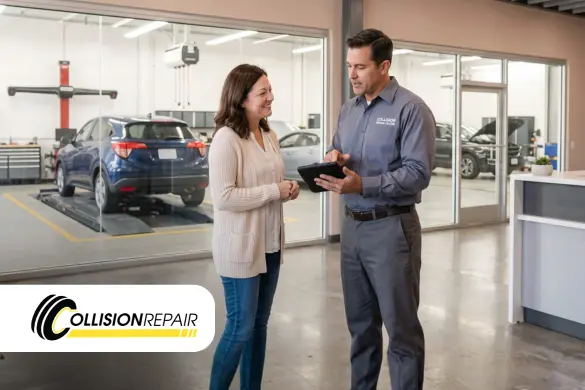
Why a Professional Inspection Still Matters
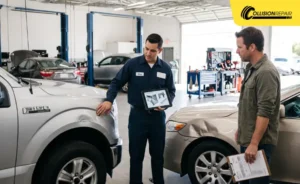
So, can you drive a car after a minor collision if quick checks show everything looks normal? Possibly, but only for a cautious trip when the car operates normally and no safety-related damage is apparent. A prompt inspection matters because technicians can raise the vehicle, scan systems, check alignment, test lighting, and examine parts behind the bumper.
Ask the repair facility to document findings with photographs and a written estimate. Keep records of towing, storage, inspection, and repair. When injuries or disputed fault are involved, a Torrance auto accident attorney may provide legal guidance, while a collision repair facility evaluates the vehicle.