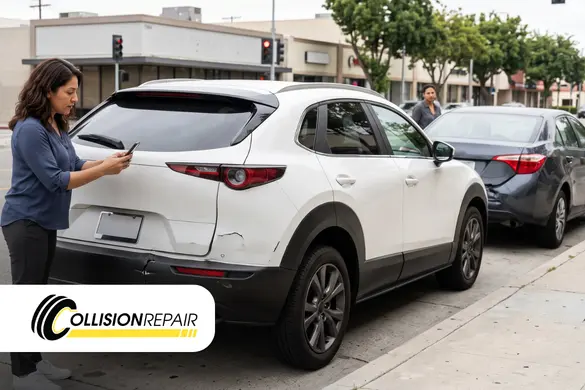
A car accident can leave California drivers facing more than visible dents and broken lights. Hidden damage, insurance deductibles, and disputes over replacement parts can complicate even a straightforward repair. Collision repair services may be covered by the at-fault driver’s liability insurance or your own policy, depending on the circumstances.
Coverage can include structural work, replacement panels, painting, and safety-system checks, but limits and exclusions matter. Knowing which insurer should pay, how estimates work, and where you can take your vehicle helps you avoid unexpected expenses.
What Does Insurance Typically Cover?
Insurance may cover reasonable repairs resulting from a covered accident. Payment depends on the policy, fault, and vehicle value.
Commonly covered work includes:
- Body repairs: Fixing doors, bumpers, fenders, and panels.
- Structural repairs: Correcting frame or unibody damage.
- Painting: Restoring damaged surfaces and matching finishes.
- Mechanical repairs: Fixing damaged suspension, steering, or cooling systems.
- Safety systems: Inspecting and recalibrating affected cameras and sensors.
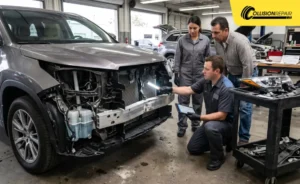
Hidden damage may emerge during disassembly. The shop can submit a supplemental estimate for insurer review. Request documentation before authorizing more work.
If repair costs approach the car’s actual cash value, the insurer may declare a total loss. A complete estimate should distinguish accident damage from wear, maintenance needs, or unrelated prior damage.
Which Insurance Policy Pays After a Crash?
The payment source depends on responsibility and the coverage purchased.
- At-fault driver’s liability: Pays for covered damage to others’ vehicles, up to policy limits, generally without a deductible for the claimant.
- Your collision coverage: Pays for covered damage regardless of fault, minus your deductible. Your insurer may seek reimbursement, including your deductible.
- Uninsured motorist property damage (UMPD): This optional coverage generally pays up to $3,500 when an identified uninsured driver causes damage, and you lack collision coverage. A collision deductible waiver is separate.
Since January 2025, California’s standard minimum property damage liability limit has been $15,000 per accident. That minimum does not guarantee full payment of every repair bill.
How Can You Keep the Insurance Claim Moving?
Good documentation helps adjusters and technicians. After a collision:
- Photograph damage: Capture each side of the car, close-ups, license plates, and the crash location when safe.
- Save records: Keep the claim number, police report information, towing invoices, and insurer messages together.
- Arrange an inspection: Obtain an itemized estimate before approving repairs, and ask when disassembly may reveal additional damage.
- Check approvals: Confirm whether a supplement requires a second inspection or authorization from the insurer.
Tell the shop about unusual noises, warning lights, or changes in how the vehicle drives. These observations can help technicians identify accident-related problems that photographs cannot show. Avoid driving an unsafe vehicle.
OEM vs. Aftermarket Parts: What Should You Know?
Parts affect estimates and repair quality. An original equipment manufacturer (OEM) part comes from the vehicle manufacturer or its supplier. Aftermarket parts come from other manufacturers. Shops may also propose used parts.
California does not mandate OEM parts for every claim. Under 10 CCR § 2695.8(g), insurer-required aftermarket crash parts must equal OEM parts in kind, quality, safety, fit, and performance.
Insurer-specified aftermarket parts also require disclosures. Review each part description and ask whether substitutes meet the manufacturer’s procedures.
For collision repair services involving cameras, sensors, or structural components, ask the shop to explain the safety-related procedures and parts it recommends. Record disagreements with the adjuster.
Can You Choose Your Own Repair Shop?
Yes. California drivers have the right to select their auto body repair shop. Under California Insurance Code § 758.5, an insurer cannot require you to use a specific facility, although it may recommend one under applicable rules.
You can request an independent estimate from a licensed shop. Insurers cannot automatically cap reasonable repair costs at their preferred shop’s rates.
Before authorizing work:
- Verify the shop’s registration with California’s Bureau of Automotive Repair (BAR).
- Request an itemized estimate identifying labor and replacement parts.
- Ask how supplemental damage, warranties, and safety-system calibration will be handled.
- Confirm whether the insurer has approved the proposed work and discuss any potential out-of-pocket difference.
California requires your authorization before initial or additional repairs.
Rental Cars and Diminished Value: What Else Can You Claim?
Your repair bill might not capture other accident-related losses.
- Rental reimbursement: Optional coverage may pay for a rental during covered repairs, subject to limits. From an at-fault driver, you may seek reasonable loss-of-use damages.
- Towing and storage: Necessary, reasonable charges may be covered. Save receipts and avoid delays.
- Diminished value: Even after repairs, accident history may lower resale value. You may claim proven remaining loss from an at-fault driver. Your collision policy may exclude it.
Keep rental agreements, invoices, repair timelines, and vehicle valuations. Payment varies. For diminished value, independent appraisals or comparable sales may help demonstrate a measurable loss, rather than relying on a general estimate.
When Should You Contact a California Car Accident Attorney?
Most straightforward repair claims do not require legal representation. However, consider speaking with a California car accident attorney when an insurer disputes fault, refuses necessary repairs, offers too little for a total loss, or when the crash causes injuries.
An attorney can assess evidence and disputes over repairs, loss of use, or other damages. If your disagreement concerns a repair shop’s workmanship, California’s BAR also accepts complaints and offers no-cost collision repair inspections for eligible vehicles.