When you bring your vehicle to an auto body shop, or a collision repair shop that most of the time works with the insurance company following a crash for a repair process, the initial estimate provided by an insurance adjuster rarely reflects the true scope of work required and the preliminary estimate is far from the real cost. Outer bumper covers and pristine body panels often hide underlying crushed subframes, frame bends, and damaged safety sensors.
Understanding what is a collision repair teardown is the single most critical step in ensuring your vehicle is repaired completely, safely, and accurately according to factory specifications. All the repairing procedures must be understood and covered by the insurance company.
What Is a Collision Repair Teardown, and What Happens During This?
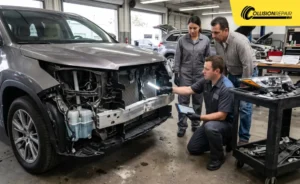
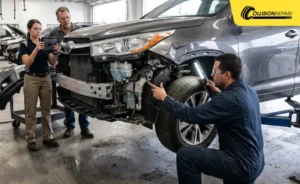
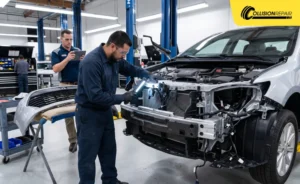
Speaking of the vehicle repair process, what is a collision repair teardown in practice? A collision repair teardown is the auto body repair procedure: systematic disassembly of damaged vehicle components by certified technicians to inspect the underlying mechanical, electrical, and structural systems, and repair procedures of your vehicle after a damage assessment.
The repair planning process is complex. Unlike a standard visual estimate, which only takes 10 to 15 minutes and covers surface-level panel denting or paint scratches, a collision repair teardown procedure involves a diagnosis, scanning, repair planning, and hours of meticulous labor to also determine repair timelines and even repair start date and specially scheduling repairs. Technicians carefully strip back plastic fairings, unbolt crushed fender liners, and remove interior trim to uncover hidden damage.
During a teardown, technicians perform three core operations:
- Component Disassembly: After a diagnostic scan, repairing procedures involve removing bumpers, panels, and lights to expose hidden support structures.
- Diagnostic Scan: Running pre-repair computer diagnostics on Advanced Driver Assistance Systems (ADAS).
- Hardware Cataloging: Documenting non-reusable single-use clips, bolts, and structural fasteners.
Why Is a Teardown Important for Finding Hidden Collision Damage?
Modern vehicles are engineered with complex crumple zones. These zones are designed to dissipate and absorb kinetic energy during an impact, protecting the passenger cabin. While this engineering saves lives, it often masks severe internal harm beneath plastic panels that spring right back into shape after a crash.
A teardown is essential for uncovering hidden collision damage and executing all repair procedures, such as:
- Bent Unibody Rails: Damage finder of the frame structural shifts that compromise crash safety.
- Suspension & Alignment Damage: Hairline fractures in control arms or subframes.
- Cracked Liquid Cooling Lines: Hidden leaks in radiators or air conditioning condensers.
- Misaligned ADAS Sensors: Unseen displacement of radar units and cameras.
Without a physical teardown, these structural issues go unnoticed until after you drive off the lot, putting your safety and vehicle value at risk: an effective diagnosis scan.
Visual Inspection vs. Complete Teardown
Feature | Visual Inspection | Complete Teardown |
Duration | 10 – 15 Minutes | 2 – 5 Hours |
Scope | Visible outer sheet metal and paint | Internal structures, wiring, and ADAS |
Accuracy | Rough preliminary guess | Final, binding repair blueprint |
Safety Check | Surface-level only | Full structural & mechanical audit |
How Can a Teardown Change the Initial Repair Estimate?
The change in the cost estimate is almost guaranteed to exceed the initial cost estimate after disassembly. Once technicians assess the internal and electrical damage, the body shop drafts a supplemental estimate (or supplement) to reflect the updated required parts, labor hours, and technical procedures.
In California, auto body shops operate under strict guidelines enforced by the California Bureau of Automotive Repair (BAR). Under BAR regulations, a repair facility cannot perform additional work or bill for hidden damage found during a teardown without securing explicit authorization from you first.
What Happens After Additional Damage Is Discovered?
When hidden collision damage is exposed even after diagnosis scan, the repair facility follows a clear protocol:
- Documentation: Technicians take detailed photos and write line-item descriptions of newly discovered damage.
- Insurer Submission: The shop submits the supplement directly to the insurance adjuster for review and financial approval.
- Customer Notification: You are updated on changes to the repair timeline and final costs.
What If the Damage Exceeds Vehicle Value?
This requires insurance information: even after the damage assessment, after a diagnostic scanning well done, if there is hidden damage that pushes the repair cost above the state’s total loss threshold, the insurance company may declare the car a total loss.
In disputed insurance situations or complex multi-vehicle accidents, consulting a qualified California auto accident lawyer can help protect your rights, ensuring you receive fair vehicle valuation and proper personal injury compensation in the collision repair shop.
For more information on navigating insurance approvals, read our guide on how collision repair estimates work in California.
How Does a Proper Teardown Support Safe and Complete Repairs?
A proper teardown does far more than balance the accounting books: it’s the repair quality that guarantees your vehicle is safe to drive:
- Structural Integrity: Ensures the vehicle’s unibody frame meets original factory specifications, guaranteeing crumple zones function correctly in a future crash.
- Safety System Calibration: Modern safety features like automatic emergency braking and lane-keeping assistance rely on pinpoint radar and camera alignment. Disassembly allows technicians to properly recalibrate these delicate systems.
- Preventing Future Mechanical Failure: Uncovering minor suspension cracks or hidden radiator leaks during teardown prevents catastrophic mechanical breakdowns later on.
To learn more about keeping your vehicle in top condition post-repair, check out our advice on post-accident vehicle maintenance and care.