Imagine driving along Highway 99 near Fresno when a semi-truck suddenly jackknifes across your traffic lane. The crash lasts seconds, but the aftermath can affect your vehicle, your health, and your income for months.
Unlike standard car repairs, truck collision repairs often involve heavier structural damage, larger components, commercial safety standards, and complex insurance company investigations.
After serious truck accidents, repair records, evidence, and inspection findings may also affect California truck accident claims, liability disputes, and long-term compensation.
Why Car and Truck Collision Repairs Require Different Expertise
Regular vehicle repairs often focus on:
- Body panels and paint
- Passenger-car systems
- Cosmetic damage and alignment
By comparison, truck collision repairs may involve:
- Frame structure and load-bearing systems
- Cargo handling and Vehicle maintenance records
- Mechanic inspection and black box data
- Driver logs and FMCSA safety regulations
Because commercial trucks operate under strict federal standards and local regulations in California, repair mistakes can create serious safety, liability, and California truck accident claims concerns.
Difference #1: Structural Frame Design and Repair Complexity
Passenger cars typically use unibody construction, where the body and frame work together as one structure. By comparison, truck collision repairs often involve stronger frame rails, larger impact zones, and heavy-duty structural systems designed to support towing and cargo loads across California roadways, such as the I-5 corridors.
After serious crashes, repairs may require:
- Frame repair and accident reconstruction
- Mechanic inspection and evidence collection
- Police reports, photos, and structural analysis
When frame damage affects steering, cargo stability, or roadway safety, these records may also support California truck accident claims and liability investigations.
Difference #2: Suspension and Load-Bearing Components
Because commercial trucks carry heavier loads, truck collision repairs often involve more severe suspension, axle, tire, alignment, and steering damage.
These systems must withstand:
- Cargo loading requirements
- Rollover danger
- Commercial safety standards
- Demanding vehicle maintenance conditions
When hidden damage is ignored, victims may face serious injuries, medical bills, pain and suffering, income loss, and long-term liability issues tied to unsafe truck operation.
Difference #3: Parts Size, Cost, and Availability
Compared to passenger vehicle repairs, truck collision repairs often require larger OEM parts, commercial/heavy vehicle component standards, and specialty equipment, which increase repair costs and labor time. Supply delays are also more common after semi-truck or big rig collisions involving trucking companies and complex insurance policies.
Car Repairs | Truck Collision Repairs |
Smaller parts | |
Faster part availability | Commercial supply delays |
Lower labor costs | Higher repair costs and labor time |
Simpler insurance estimates | More settlement disputes and policy reviews |
Difference #4: Labor Time and Equipment Requirements
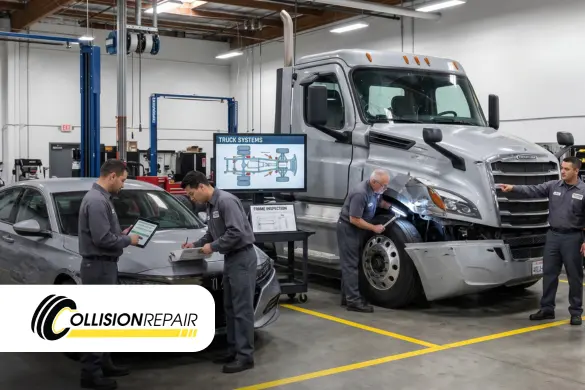
Unlike standard vehicle repairs, truck collision repairs often require heavy-duty lifts, specialized tools, frame-measuring systems, and advanced diagnostic scans designed for commercial vehicles.
Repairs may also involve:
- Mechanics with commercial truck training
- Detailed vehicle inspections
- Accident reconstruction support
- Federal Motor Carrier Safety Administration compliance reviews
Because trucks operate under stricter commercial safety standards, repair timelines are usually longer and require more technical expertise than passenger-car repairs.
Difference #5: Insurance Estimates and Repair Costs
Insurance estimates in truck collision repairs are often far more complex than standard vehicle claims. Commercial truck accidents may involve multiple insurance policies, trucking company liability, cargo loss, medical care costs, black box data, expert witness testimony, and potential litigation.
To support California truck accident claims, insurers and investigators may review:
- Repair estimates and mechanic findings
- Photos, police reports, and witnesses
- Medical records and evidence collection
These records can directly affect compensation, settlement disputes, and long-term financial recovery after serious truck accidents.
How to Choose the Right Shop for Truck Collision Repairs
Not every repair facility is equipped to handle truck collision repairs safely and correctly. The right shop should provide:
- Documented inspections and mechanical findings
- Experience with commercial truck repairs
- Clear insurance communication and repair records
- Photos and familiarity with truck accident evidence
A qualified repair shop protects more than your truck’s appearance. Proper inspections and documentation can support roadway safety, repair quality, and California truck accident claims involving liability or compensation disputes.
Call Collision Repair (CORE) for expert help.
At Collision Repair (CORE), we connect drivers and truck owners with trusted repair shops, towing support, and help throughout the insurance process after serious accidents. Our CORE-certified professionals understand the complexities of truck collision repairs and California truck accident claims, from structural damage to repair documentation and insurance communication.
At CORE, we’re more than a directory—we’re your dedicated partner in car repair and roadside support. Whether you’re a local resident or just passing through, count on us every step of the way.
We’re here to help. Contact us today for a free quote