Imagine driving on the I-5 near Sacramento when a semi-truck suddenly drifts into your traffic lane. The crash lasts seconds—but the aftermath can affect your vehicle, your health, and your income for months.
After a serious truck accident, truck collision repairs involve far more than dents or broken parts. Repair records, evidence, insurance claims, liability, and medical bills can all become critical in California truck accident claims involving trucking companies and federal safety regulations.
In this guide, you’ll learn which repairs are most common, why some damage is easy to miss, and how proper documentation can help protect both your safety and your compensation.
Why Truck Collision Repairs Are Different From Standard Auto Repairs
Unlike regular auto body work, truck collision repairs involve far more than replacing damaged parts. A commercial truck accident can affect safety systems, cargo stability, and long-term vehicle performance.
Investigations often include:
- black box data
- driver logs
- Vehicle maintenance records
- cargo loading requirements
- FMCSA safety regulations
Because trucking companies and Commercial Driver’s License holders must follow strict federal regulations, repair failures may raise serious concerns about negligence, liability, and roadway safety.
Frame and Structural Damage in Truck Collision Repairs
Frame damage is one of the most serious issues found in truck collision repairs after crashes along California roadways like the I-5 corridors. Even small structural shifts can affect steering, cargo stability, and overall safety.
Proper repairs often require:
- frame repair and mechanic inspection
- accident reconstruction
- police reports and photos
- detailed evidence collection
If structural damage is overlooked, it may increase the risk of future wrecks and strengthen liability record concerns during California truck accident claims.
Suspension and Axle Repairs After a Truck Accident
After a collision, truck collision repairs often include suspension, axle, tire, alignment, and steering damage that may not be visible immediately.
Common risks include:
- loss of vehicle control
- uneven tire wear
- steering instability
- rollover danger on California roads
When a truck becomes unstable, victims may suffer trauma, broken bones, shoulder injuries, PTSD, and ongoing medical care needs—especially after high-force commercial truck accidents.
Bed Panel, Tailgate, and Cargo-Area Repairs
Cargo-area damage is common in truck collision repairs, especially after commercial truck accidents involving shifting loads or unsafe cargo handling.
Common problems include:
- dents and tailgate damage
- cargo-area distortion
- structural loss
- rising repair costs
When cargo loading requirements are ignored, unsecured loads may violate trucking regulations, affect insurance policies, and create breach and settlement disputes during California truck accident claims.
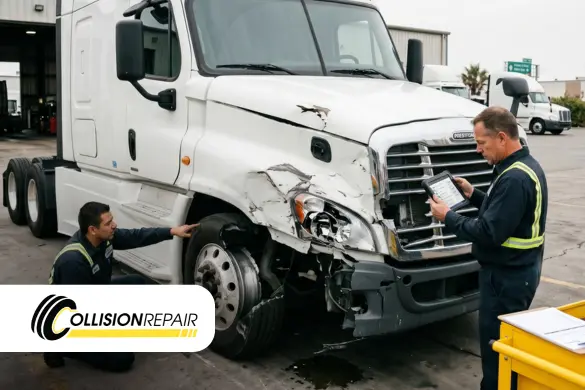
Front-End Truck Collision Repairs: Bumpers, Grilles, Radiators
Front-end damage is one of the most common issues in truck collision repairs after a semi truck accident on California highways.
Repairs often involve:
- bumpers and grilles
- radiators and cooling systems
- headlamps and hazard flashers
This damage can reduce visibility, affect road safety, and increase the risk of traffic lane hazards or overheating problems.
When unsafe Vehicle maintenance or mechanical failure is suspected, investigators may review FMCSA requirements, maintenance records, and evidence to determine whether negligence contributed to the crash.
Truck Cab and Door Panel Repairs
Cab damage is common in truck collision repairs after high-impact crashes involving semi-trucks or commercial vehicles. Repairs may include door panels, airbags, glass, and structural driver-protection components that affect safety and vehicle access.
The condition of the cab can also support California truck accident claims through:
- police reports
- videos and photos
- Eyewitness statements
- injury documentation and evidence collection
Wheel, Tire, and Alignment Issues After a Collision
Hidden wheel and alignment problems are common in truck collision repairs after heavy-impact crashes.
Drivers may notice:
- uneven tire wear
- steering pull
- wheel vibration
- alignment instability
These issues can increase future tire failure risk and make the truck unsafe on California roadways.
Because insurance companies often focus only on visible damage, hidden mechanical problems may go unnoticed during inspections. Trucks should receive a full mechanical evaluation before accepting a claim settlement after a commercial truck accident.
Electrical and Sensor Repairs in Modern Trucks
Modern truck collision repairs often involve electronic systems that go far beyond visible damage.
Common repairs and inspections include:
- black box data recovery
- electronic logging device analysis
- ADAS-style technologies and sensor repairs
- diagnostic scans and vehicle inspections
These systems may also become critical evidence during FMCSA investigations involving Hours of Service violations, logbook issues, or unsafe trucking operations after a commercial truck accident.
How Insurance Covers Common Truck Collision Repairs
Insurance coverage in truck collision repairs often depends on liability findings, insurance policies, and the severity of the damage after a commercial truck accident.
California truck accident claims may require:
- repair estimates and mechanic findings
- photos and black box data
- witnesses and police reports
- medical professionals and expert witness testimony
When insurance companies dispute damages or settlement amounts, these records can become critical during litigation involving trucking companies, negligence, or long-term compensation claims.
When Truck Collision Repairs May Lead to a Total Loss
In some cases, truck collision repairs may cost more than the vehicle’s actual value—especially after severe structural or mechanical damage. A total loss can affect the truck owner’s income, business operations, and long-term damages.
When incomplete repairs reduce compensation or create future safety risks, trucking companies and insurers may face mediation, litigation, or lawsuit disputes involving case-related costs, liability, and financial loss.
Legal Next Steps After Truck Collision Repairs
At Collision Repair (CORE), we help drivers and truck owners navigate the stress of accidents with trusted repair shops, towing services, and support throughout the insurance process. Whether you need help after a minor collision or serious commercial truck damage, our CORE-certified network is built to support safe, reliable repairs and California truck accident claims.
We work with insurance providers to help reduce out-of-pocket costs while connecting you with qualified professionals you can trust.
At CORE, we’re more than a directory—we’re your partner in collision repair, roadside assistance, and post-accident support across California. Contact us today for a free quote.