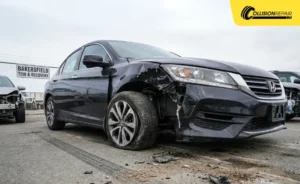
SUMMARY
Unseen suspension damage doesn’t just threaten your car’s performance, ignoring them can lead to costly repairs and safety risks. Get your vehicle inspected before closing your insurance claim.
Table of Contents
Your car looks repaired. The paint shines. The body panels line up. But when you start driving, something feels off. That uncertainty is common after an accident. Suspension damage after a crash often goes unnoticed, even by insurance companies.
In this guide, you’ll learn how hidden suspension issues affect safety, why they’re frequently missed, and when to take action to protect your vehicle and your claim.
What Suspension Damage Looks Like After a Collision
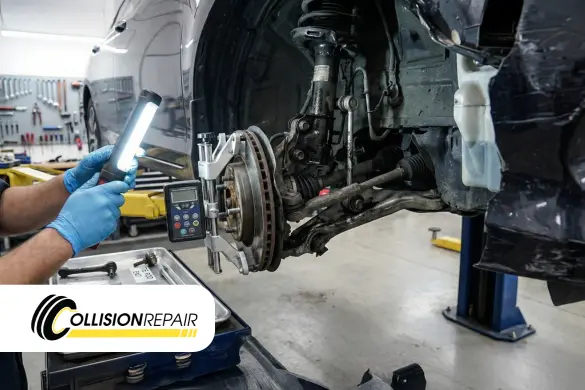
Your suspension system includes control arms, struts, shocks, and joints that keep your vehicle stable and balanced.
After a collision repair, these parts can bend, crack, or shift—even when there’s no visible body damage. That’s why suspension damage after a crash often goes unnoticed. When left unchecked, it can affect steering control, braking performance, and how your tires stay in contact with the road.
Common Accidents That Cause Suspension Damage
Many drivers assume only severe crashes cause problems, but that’s not always true. Suspension damage after a crash commonly occurs in:
- Side-impact collisions, which stress control arms and joints
- Pothole or curb impacts immediately after an accident
- Rear-end crashes that force wheels out of alignment
Even low-speed accidents can bend suspension components, leading to handling and stability issues.
Warning Signs Drivers Often Ignore
After a repair, many drivers notice changes but dismiss them as normal. Common warning signs of suspension issues after a crash include:
- The vehicle pulling to one side
- Uneven tire wear over time
- Steering wheel vibration, especially at higher speeds
- Clunking or rattling noises when driving over bumps
These symptoms are often overlooked because the car looks fixed. But they can signal hidden suspension damage that requires immediate attention.
Why Suspension Damage Is Often Missed in Visual Inspections
Most insurance estimates focus on visible damage like dents, paint, or bumper alignment. But the suspension sits beneath the vehicle, where problems aren’t easy to spot during a quick inspection. Adjusters and shops under time pressure may overlook subtle shifts or bent components. That’s why suspension damage after a crash often requires deeper diagnostics, lifts, and alignment testing to identify issues that affect safety and performance.
How Professional Collision Shops Inspect Suspension Systems
A thorough inspection goes far beyond a quick visual check. A trusted auto body shop in Bakersfield uses advanced tools to identify suspension damage after a crash, including:
- Diagnostic scans and precise alignment checks
- Lift inspections to examine control arms, struts, and joints
- Component testing to detect hidden stress or bending
This level of evaluation separates full collision repair from basic repairs that may overlook critical safety issues.
When to Get a Suspension Inspection After a Crash
Schedule a suspension inspection immediately after any noticeable impact, especially if handling feels off following repairs. It’s also critical to inspect your vehicle before closing the insurance claims process. Addressing suspension damage after a crash early allows proper diagnostics, supports accurate estimates, and helps ensure your collision repair is completed safely and correctly.
FAQs About Suspension Damage After a Crash
Can suspension damage get worse over time?
Yes. Left untreated, suspension damage after a crash can worsen as you continue driving. Bent components place extra stress on tires, brakes, and steering systems. Over time, this can lead to additional mechanical failures, higher repair costs, and compromised vehicle safety.
Will insurance cover suspension inspections?
Often, yes—but only if the damage is properly documented. Many insurance companies focus on visible auto body repairs during the estimate process. Requesting advanced diagnostics and clear insurance communication from a collision repair center improves the chances of coverage and protects your warranty rights.
Is it safe to keep driving until my next service?
Not recommended. Even if the vehicle feels drivable, hidden suspension issues can affect braking and control. Certified technicians at a professional auto collision shop can assess safety risks early, improving your customer experience and preventing further damage.
Legal & Next Steps: Protecting Your Safety and Your Claim
Missed suspension damage after a crash can affect more than your vehicle—it can weaken an injury claim if insurance companies argue the damage wasn’t serious or properly documented. That’s why expert evaluations and detailed repair records matter.
Working with a trusted Bakersfield auto body shop helps ensure structural damages are fully identified and that your collision repair findings are clearly documented and recognized during the claims process.