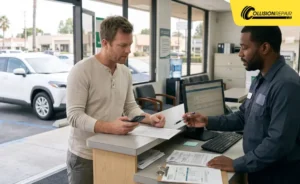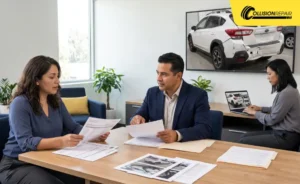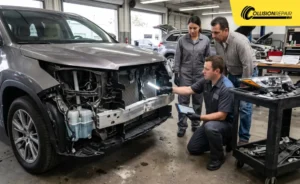
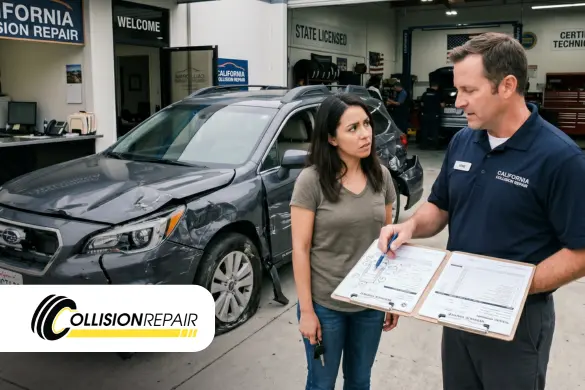
A car accident can leave more than visible damage—it creates a paper trail that may directly impact your financial recovery. Car collision repair documentation often becomes a key piece of evidence when injury claims are evaluated.
From repair estimates to photos and invoices, these records help connect the force of impact to the injuries reported. In California, where insurance disputes are common, detailed documentation can strengthen your position and reduce delays.
If you’re dealing with repairs and medical concerns at the same time, organizing this information early can make a measurable difference in how your claim progresses.
Why Repair Records Matter in Injury Claims
After a crash, insurance companies assess two things: liability and damages. While medical records prove injuries, repair documentation supports how the crash occurred and how severe it was.
Here’s how it helps:
- Impact verification: Vehicle damage patterns show the force and direction of the collision
- Consistency check: Aligns your account with physical evidence
- Claim validation: Supports the legitimacy of reported injuries
- Dispute prevention: Reduces insurer arguments about low-impact collisions
In many cases, a California car accident lawyer will rely on repair records to reinforce insurance claims, especially when insurers try to minimize payouts.
Key Types of Car Collision Repair Documentation
Not all records carry the same weight. The more comprehensive your file, the stronger your claim.
Essential Documents to Keep
- Repair estimates from certified auto body shops
- Final invoices detailing parts and labor
- Before-and-after photos of vehicle damage
- Diagnostic reports (frame damage, internal systems)
- Towing receipts and storage fees
- Communication records with repair shops
These documents collectively form your car collision repair documentation, helping demonstrate the full scope of damage.
How Documentation Links Vehicle Damage to Injuries
Insurance companies often challenge injury claims by arguing that the crash was too minor to cause harm. This is where documentation becomes critical.
Example Connection
Evidence Type | What It Shows | Why It Matters |
Frame damage report | Structural impact | Indicates a high-force collision |
Airbag deployment record | Sudden deceleration | Supports injury severity |
Repair cost breakdown | Extent of damage | Correlates with crash intensity |
Photos of intrusion | Cabin impact | Links to occupant injuries |
This type of structured evidence helps establish causation—a key requirement in personal injury claims.
California Legal Context: Why Evidence Matters
California follows a comparative fault system. This means your compensation can be reduced if you are partially at fault.
Strong documentation helps:
- Support your version of events
- Limit fault assigned to you
- Increase credibility during negotiations
Additionally, under California law, you generally have two years from the date of the accident to file a personal injury claim. Delays in gathering documentation can weaken your case.
Insurance companies are also known to scrutinize claims involving “low-speed impacts.” In these situations, detailed car collision repair documentation can counter arguments that injuries are exaggerated.
Actionable Steps After a Car Accident
If you’ve recently been in a crash, take these steps to protect your claim:
At the Scene
- Take clear photos of all vehicles involved
- Capture road conditions and surroundings
- Get contact information from witnesses
During the Repair Process
- Choose a reputable, certified repair shop
- Request detailed written estimates
- Keep all receipts and reports
After Repairs
- Store digital and physical copies of all documents
- Avoid discarding damaged parts if possible
- Track any additional repair-related expenses
These steps ensure your documentation is complete and usable in the event of disputes.
Common Mistakes That Can Weaken Your Claim
Even strong cases can be undermined by poor documentation practices.
Avoid these:
- Relying only on verbal repair estimates
- Failing to take photos before repairs begin
- Using uncertified or unverified repair shops
- Losing receipts or invoices
- Delaying repairs, which can raise questions
A lack of proper records can make it harder to prove damages in personal injury claims.
How Collision Repair Services Can Help
Managing repairs, insurance, and documentation simultaneously can quickly become time-consuming—especially after an accident. A streamlined service helps simplify the process by organizing each step and reducing the risk of missing critical details.
A structured approach can:
- Connect you with vetted, certified repair shops
- Ensure all repair records are properly created and stored
- Coordinate directly with insurance providers
- Help minimize delays in repairs and approvals
With the right support, you can focus on recovery while the technical and administrative work is handled efficiently.
Secure Your Claim With Verified Repair Evidence
Accurate and complete car collision repair documentation can directly influence the outcome of your injury claim. It supports the severity of the crash, strengthens your credibility, and helps counter insurance company tactics aimed at reducing payouts.
If you’ve been in an accident, Collision Repair manages repairs and documentation by connecting you with certified shops, towing services, and insurers—often lowering out-of-pocket costs. Get a free quote today to start restoring your vehicle and peace of mind.