SUMMARY
This guide explains how insurance claims impact auto body repairs in California. It covers liability and collision coverage, repair estimates, supplements, parts selection, legal rights, and common insurer tactics. Drivers will learn to protect themselves from undervalued repairs and make informed decisions after an accident.
Table of Contents
A crash can happen in seconds—but dealing with insurance and auto body repairs can take weeks or even months. Many California drivers assume the process is straightforward until they face delays, low estimates, or pressure to use a specific repair shop.
Knowing how insurance works after a crash can safeguard your vehicle, finances, and legal rights. Approving repairs or accepting a settlement without clear information can lead to undervalued damage or delays, so understanding the process helps you respond effectively if issues arise.
How the Auto Insurance Claim Process Works After an Accident
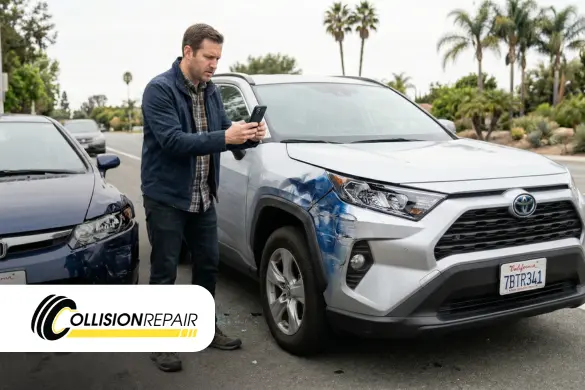
After a collision, most drivers follow these steps:
- Report the accident to your insurance company.
- Provide photos, a police report (if available), and driver information.
- An adjuster inspects the vehicle or reviews submitted documentation.
- The insurer issues a repair estimate.
- Repairs begin after approval.
In California car accident claims, insurers first evaluate liability. If another driver caused the crash, their insurance should pay for property damage. If the fault is disputed, your own policy may apply depending on your coverage.
Timelines vary. Straightforward claims may resolve quickly. Disputed or high-damage claims often take longer to resolve.
Property Damage Coverage vs. Collision Coverage Explained
Your policy structure directly affects how auto body repairs are paid after an accident.
According to the California Department of Insurance, California drivers must carry minimum property damage liability coverage, but collision coverage is optional and depends on your selected policy.
Here’s a side-by-side comparison:
Feature | Property Damage Liability | Collision Coverage |
What It Pays For | Damage you cause to another person’s vehicle or property | Damage to your own vehicle after impact |
Required in CA? | Yes (minimum required) | No (optional, part of physical damage coverage) |
Typical CA Minimum Limit | $15,000 property damage (increased from $5,000 effective January 1, 2025, under SB 1107 – Protect California Drivers Act) | No state minimum; based on your selected coverage |
Higher Coverage Options | Often increased to $50,000+ | Subject to the chosen deductible (commonly $500, varies) |
Collision coverage pays for damage to your vehicle resulting from a collision with another car or object, such as a tree or structure. It usually includes a deductible, meaning you pay a fixed amount before the insurance covers the rest.
Reviewing both coverages carefully helps you avoid unexpected repair costs after an accident.
What Happens After You File a Claim
Once you submit a claim:
- An adjuster calculates the cost of repairs.
- The insurer may recommend a network repair shop.
- You receive a written estimate.
- The repair shop begins work after authorization.
However, initial estimates are not always final. Hidden damage often appears once technicians begin disassembly. This leads to what’s called a supplement.
Understanding Repair Estimates, Supplements, and Approvals
A repair estimate is the insurer’s calculation of visible damage.
A supplement is an additional request for payment when new damage is discovered. This is common in collision repair, especially when structural components are involved.
For example:
- Frame damage may not appear until panels are removed.
- Sensor or calibration issues may surface during repairs.
- Internal components may be compromised after impact.
Reputable repair facilities document and submit supplements directly to insurers. Approval may delay completion, but it ensures repairs are properly funded.
Never authorize incomplete repairs just to close a claim quickly.
Can Insurance Control Where You Repair Your Vehicle?
No. In California, insurers cannot require you to use a specific repair shop.
They may recommend Direct Repair Program (DRP) facilities. These shops have agreements with insurance companies, but the final decision is yours. Before authorizing repairs at any facility, verify the shop holds a valid BAR license using the BAR’s Auto Shop Locator at bar.ca.gov — all California auto body shops are required by law to be licensed by the Bureau of Automotive Repair.
This right is codified under California Insurance Code §1874.87, which requires insurers to provide every policyholder with an Auto Body Repair Consumer Bill of Rights at the time of policy application or after a reported accident.
Choosing your own shop for auto body repairs can affect:
- Repair quality
- Parts used
- Warranty coverage
- Long-term vehicle value
If an insurer pressures you to use a preferred facility, ask them to cite the legal requirement. In most cases, there is none.
OEM vs Aftermarket Parts in Insurance Claims
Parts selection can significantly impact safety and resale value.
OEM (Original Equipment Manufacturer) parts
- Made by the vehicle’s manufacturer
- Designed for precise fit and safety standards
- Typically more expensive
Aftermarket parts
- Produced by third-party manufacturers
- Often less expensive
- Quality varies
California law requires aftermarket parts to meet equivalent quality, safety, and performance standards as OEM parts. The repair shop must notify you in writing when aftermarket parts are used.
Some policies allow insurers to specify aftermarket parts unless you request otherwise or your policy requires OEM components.
Before approving repairs, confirm:
- What type of parts are being used
- Whether safety systems will be recalibrated
- If warranties apply
Your Legal Rights During the Repair Process
California drivers have specific rights when dealing with insurance claims:
- The right to choose your repair facility
- The right to receive a written estimate
- The right to dispute undervalued damage
- The right to request documentation of parts used
Additional rights under California law include:
- The right to request an independent repair estimate from any licensed shop even while pursuing an insurance claim;
- The right to receive written notice when aftermarket parts are used; the right to request return of replaced parts (unless under warranty); and
- The right to file a complaint with the Bureau of Automotive Repair (BAR) at bar.ca.gov or (800) 952-5210 for free mediation and dispute resolution.
If your vehicle was significantly damaged, you may also have a diminished value claim. This applies when your car’s resale value drops due to accident history—even after proper repairs.
Common Insurance Tactics That Delay or Reduce Payouts
Most insurers process claims properly. However, some common practices may affect repair outcomes:
- Issuing low initial estimates
- Delaying supplement approvals
- Recommending cheaper parts
- Disputing labor rates
- Claiming pre-existing damage
Delays increase financial pressure. Some drivers accept reduced payouts simply to resolve the matter.
Keep documentation of:
- All repair communications
- Photos before and after repairs
- Written estimates and supplements
- Rental car expenses
Detailed records strengthen your position in the event of disputes.
How to Protect Yourself From Undervalued Repairs: Consult a Lawyer
In more serious accidents, repair costs may overlap with injury claims.
You should consider speaking with a lawyer if:
- Repairs exceed policy limits
- The insurer refuses to approve the necessary supplements
- Your vehicle is declared a total loss unfairly
- You suspect bad-faith claim handling
- You are pursuing broader California car accident claims involving injuries
An attorney can review the file, negotiate with the insurer, and determine whether additional compensation is available.
Protect Your Vehicle and Your Rights
Navigating auto body repairs after a collision requires more than approving an estimate. Coverage limits, parts selection, insurer approvals, and legal rights all affect the final outcome. Understanding the repair process helps you make informed decisions and avoid overpaying.
If you need reliable collision repair or towing services, Collision Repair can connect you with trusted, certified shops committed to quality and efficiency. Get a FREE quote today and get back on the road fast.
Frequently Asked Questions
How long do insurance companies have to pay for vehicle repairs in California?
Insurers must promptly acknowledge and process claims under California laws, as there is no fixed repair deadline. Delays without valid reasons can be challenged.
Can I recover diminished value after my car is repaired?
Yes, in some cases. If your vehicle loses resale value due to accident history, you may pursue a diminished value claim against the at-fault driver.
What should I do if the repair estimate seems too low?
Request a detailed written explanation, obtain an independent repair estimate, and consider consulting a lawyer if the insurer denies coverage for necessary repairs.