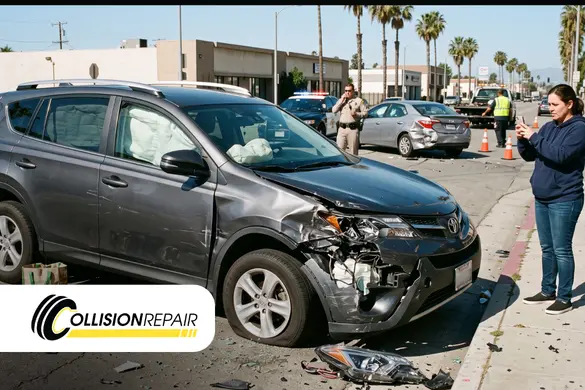
Experiencing a collision is overwhelming, and dealing with property damage after a car accident in California often brings a complex wave of paperwork, financial stress, and uncertainty about your legal rights.
Most people assume the claim ends at the repair bill, which is exactly what makes property damage the most routinely underpaid part of a California accident case. The average property damage liability claim was $5,313 in 2022, according to ISO data published by the Insurance Information Institute, and repair costs have continued to climb since. The categories below are all recoverable from the at-fault driver’s insurer, and adjusters rarely volunteer more than one or two.
What You Can Claim at A Glance
Category | What’s covered | Key authority |
Vehicle repairs | Reasonable cost to restore pre-loss condition, in a workmanlike manner | |
Replacement parts | Non-OEM parts only if equal in kind, quality, safety, fit, and performance | |
Diminished value | Lost resale value after repairs, from the at-fault insurer | |
Total loss | Actual cash value plus sales tax, license, and transfer fees | |
Towing and storage | Reasonable charges, subject to your duty to mitigate | General damages law |
Rental / loss of use | Comparable rental, or the daily value even if you don’t rent | |
Personal items | Electronics, glasses, tools, car seats, and other property in the vehicle | General damages law |
Vehicle Repair Costs
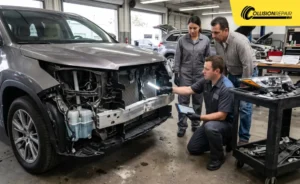
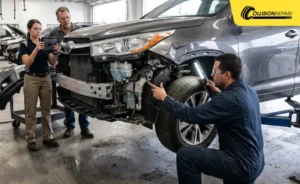
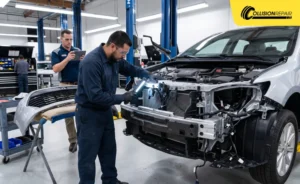
The core of the claim is simple to state: the at-fault driver’s insurer owes the reasonable cost of returning your vehicle to its pre-accident condition. California’s Fair Claims Settlement Practices Regulations (10 CCR § 2695.8(f)) require that the settlement reflect a repair performed in a workmanlike manner, not the cheapest patch that gets the car rolling.
Insist on a shop that runs full diagnostics, not just cosmetic bodywork. Hidden structural, mechanical, and electrical damage is common after a significant impact, and anything missed now becomes “pre-existing” later.
On parts, the regulation has teeth: under 10 CCR § 2695.8(g), an insurer that specifies non-OEM (aftermarket) crash parts must stand behind them as equal to original manufacturer parts in kind, quality, safety, fit, and performance, and pay the cost of returning the vehicle to pre-loss condition. Especially on newer vehicles, that rule gives you real leverage to push for OEM components.
Diminished Value
Even a flawless repair can’t erase the car accident from your car’s history report, and buyers pay less for a vehicle with a recorded collision. California law lets you recover the gap: the state’s official jury instructions (CACI 3903J) allow recovery of repair costs plus any value the vehicle lost despite the repairs.
One critical limit: this claim runs against the at-fault driver’s insurer. If the crash was your fault, or you’re collecting under your own collision coverage, under most California policies, your own collision coverage does not include diminished value, though policy language varies. Diminished value claims are most reliably pursued against the at-fault driver’s insurer.
Total Loss and Actual Cash Value
When repairs plus salvage value equal or exceed the car’s value, the insurer declares a total loss and pays the vehicle’s actual cash value (ACV): its fair market value at the moment before the crash, based on comparable local sales adjusted for mileage, options, and condition.
Two things an insurance adjuster underplays. First, in California, a total-loss settlement must include the sales tax and the license and transfer fees you’d incur when replacing the vehicle. On a $25,000 car, that’s roughly $2,000 that people routinely leave behind. Second, the ACV is negotiable: if the insurer’s comparables are from the wrong region, trim level, or condition class, counter with your own listings and maintenance records.
If you owe more on your loan than the ACV, gap insurance covers the difference; without it, the shortfall becomes part of the negotiation.
Towing and Storage Expenses
The at-fault insurer is responsible for reasonable towing from the scene and the daily storage fees that accrue while the damage is evaluated. The operative word is reasonable: you have a legal duty to mitigate damages, which means promptly moving the car out of a daily-fee impound lot and into a repair facility (or your driveway).
Storage balances that balloon because a car sat for six unnecessary weeks are the first thing an adjuster cuts.
Rental Vehicle and Loss-of-Use Costs
While your car is in the shop or until a total-loss settlement is paid, the liable insurer owes you transportation. That means a rental reasonably comparable in size, class, and utility to your vehicle: a family in a totaled minivan is not obligated to squeeze into a compact.
Personal Property Damaged Inside The Vehicle
Everything the crash destroyed inside the cabin or trunk is a separate, valid claim: phones, laptops, and other electronics; prescription glasses and jewelry; tools, sporting goods, and luggage. Values are typically paid at actual cash value, so receipts and photos matter.
Child car seats deserve special attention. NHTSA’s guidance calls for replacing a car seat after any moderate or severe crash, even with no visible damage, and after minor crashes unless a specific five-point checklist is satisfied. The replacement cost belongs in your claim, and no parent should be arguing with an adjuster about reusing a compromised seat.
Documentation That Makes The Claim Stick
Build the file before the negotiation starts: photos and video of every damaged panel, the frame, and each broken personal item, ideally from the scene.
An independent repair estimate from a shop you trust, to check against the adjuster’s numbers; receipts for recent maintenance, upgrades, and the personal items you’re claiming; and the police collision report. The California Department of Insurance enforces the fair-claims regulations cited throughout this guide, and a documented file is what turns those regulations from theory into leverage.